Removing acceptance barriers
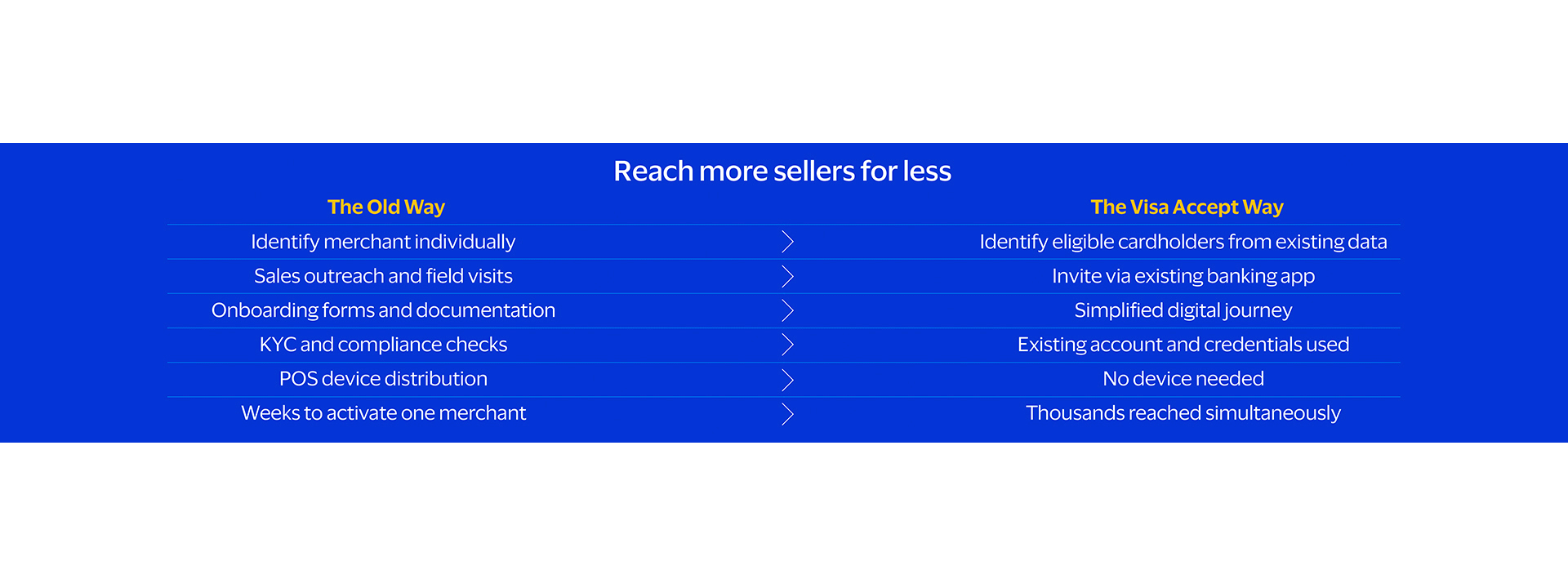
Traditional merchant acquisition has long been a high-touch, resource-intensive process. Sales outreach, onboarding forms, compliance checks, underwriting, training and support are often designed around formal merchants with sufficient volume to justify the cost to serve.
From the seller's side, non-acceptance of cards is often less about lack of demand and more about friction. Visa research shows that 32% of non-accepting sellers cite cost, complexity and access as the top barriers for card usage – the exact barriers that traditional onboarding was not designed to solve at long-tail scale.¹
Visa Accept changes the model by allowing issuers to enable eligible debit cardholders to become accepting sellers through a simplified digital journey. Rather than building a separate acquisition path for every micro-seller, issuers can use existing customer relationships and digital banking channels to make acceptance activation faster, lighter and easier to scale.
A simple and efficient solution
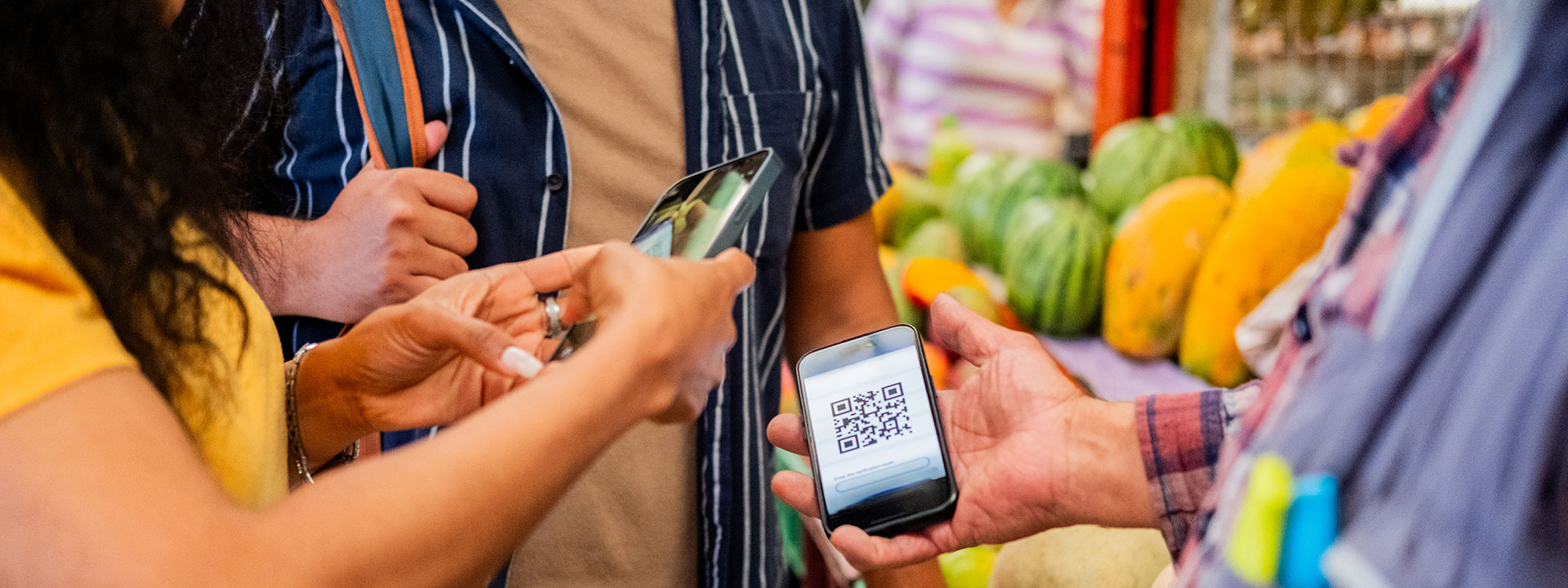
For sellers, the experience is familiar. A micro-entrepreneur can apply for Visa Accept through the mobile banking app they already use, linked to their personal Visa debit card. Once approved, they can use their smartphone to accept card payments, without needing a separate point-of-sale device.
For issuers, the model uses assets already in place: customer relationships, digital banking channels, account infrastructure and data that may help identify likely micro-sellers. Issuers can invite eligible cardholders to activate Visa Accept through a streamlined in-app journey, reaching large groups of potential sellers without relying primarily on field sales or device distribution.
Damith Pallewatte, Managing Director at Hatton National Bank in Sri Lanka, which has partnered with Visa to launch Visa Accept in the country, says: “With Visa Accept now integrated into our mobile banking app, HNB is enabling thousands of micro and small businesses to accept digital payments instantly, using just a mobile phone. This marks a significant step in our mission to modernize financial access, elevate the entrepreneurial ecosystem, and support Sri Lanka’s digital economy by digitizing P2P transactions. As the country accelerates its transformation, we reaffirm our role as a trusted partner in shaping Sri Lanka’s digital future."
The value of this model is that it tackles the same barriers that have kept micro-sellers from card acceptance: onboarding complexity, device cost and cash flow.
This model unlocks portfolio-level reach that traditional merchant acquisition methods struggle to match. Instead of relying primarily on one-by-one sales outreach, issuers can reach large groups of eligible sellers through digital channels, reducing marginal acquisition effort and improving scalability.
“From a micro-seller perspective, there are a few things that we're solving for,” says Maria Peralta Giraldo, Director, Growth Products, Visa Accept. “One is the complication of getting onboarded. With Visa Accept, we simplify this as much as possible, so micro sellers can use the apps they know and easily access the solution.
“The second is the cost of the device and the cost of acceptance. We’re not asking them to acquire any new device as they can use their own smartphone, and we have reduced the cost that will be incurred for transactions like these.”
Peralta adds that the most important factor for sellers is cash flow immediacy, as Visa Accept is able to provide near-real time settlement of funds.
For issuers, reducing these seller-side roadblocks expands the addressable acceptance base without requiring a proportional increase in sales, device distribution or onboarding infrastructure.
Risk and compliance controls remain important. Visa Accept is designed with program controls, including transaction-volume and ticket-size limits, as well as dispute management capabilities, to help issuers manage acceptance risk. Because activation happens within the issuer’s digital environment, the experience can be integrated into existing customer channels while still applying appropriate eligibility, monitoring and compliance processes.
Visa has also developed on-behalf-of capabilities designed to simplify the integration effort for issuers. Issuers still play a central role though by integrating the functionality into their mobile banking app, supporting customers, complying with local regulations, acting as the acquirer in the traditional four-party model and driving adoption through marketing and engagement programs.
Issuer partners are also framing Visa Accept around SME digitization, streamlined onboarding and easy acceptance.
“We are proud to bring Visa Accept to our merchant network, helping small businesses access digital payments and expand growth,”says Phung Duy Khuong, Standing Deputy CEO and Head of Retail Banking Division, Vietnam Prosperity Joint Stock Commercial Bank (VPBank). “This launch supports VPBank’s focus on accelerating SME digitization through streamlined onboarding and easy acceptance.”
The economics of portfolio-led activation
This combination is impactful. For issuers, the economic impact comes from lowering the marginal effort required to reach each seller. Informal sellers can be reached through channels they already use, while issuers can generate new acceptance volumes without expanding sales, device distribution or onboarding infrastructure in the same proportion.
The result is a more economically viable model for the long tail: faster activation paths, broader reach and access to seller segments that were previously difficult to serve profitably.
This is where the next wave of seller growth will come. It will not depend only on finding new merchants outside the bank, but will also come from activating sellers that issuers already serve. By using existing debit relationships and banking app distribution, Visa Accept helps make micro-seller acquisition faster and more economically viable.
Sources